A Garden Visit in Late Afternoon: What to Notice
A late-afternoon garden visit turns changing light, scent, and sound into a simple field practice, helping you notice the garden without naming every plant.
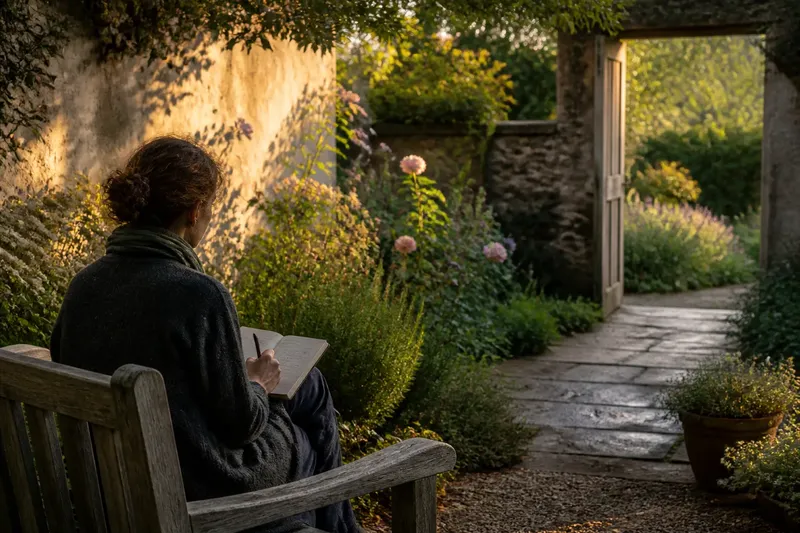
The most common mistake on a late-afternoon garden visit is trying to identify every plant before the light changes. You miss the quiet shifts that make the hour distinct: a flower tilting toward the sun, a breeze carrying scent across a path, or a bird calling from a hedge. Leave the names for another day and notice what changes around you.
Watch the light move across the garden
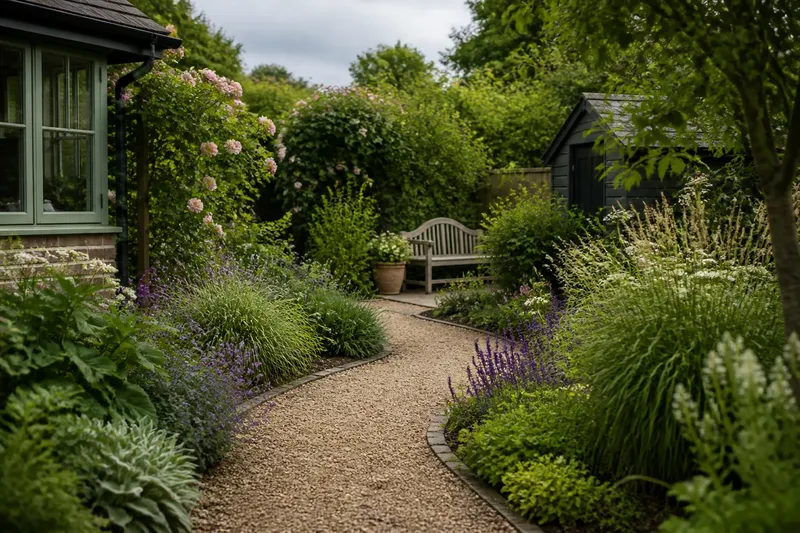
Choose a spot where you can see both sun and shade, such as a lawn’s edge or a bench beside a mixed border. Pause. Notice which surfaces still hold brightness and which have slipped into shadow. A pale wall may glow while nearby leaves look dark; gravel can catch the last light after the soil has dulled.
Watch the edges. The boundary between sun and shade often crosses a plant or paving stone before the whole area changes. Look for translucent leaves, petals that close or tilt, and long stems casting narrow shadows. You do not need a plant name to see what it is doing.
Look toward the light, then turn away from it. The same border can seem vivid from one angle and mostly green from another. If you want a record, jot down a few plain details: “gold light on the wall,” “deep shade beneath the rose,” or “one bright patch on the path.” These notes hold the moment without turning it into a catalogue.
Follow the scent on the air
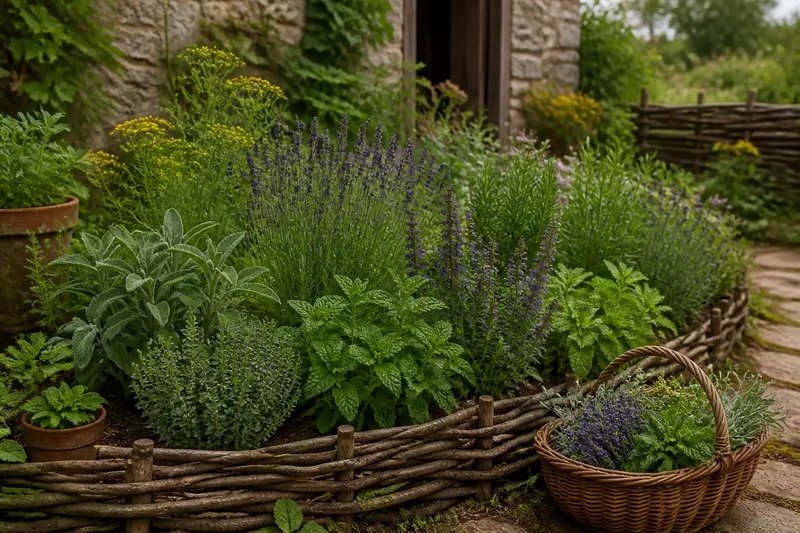
Garden fragrance can be elusive. Instead of leaning over every bloom, pause where air passes between beds or around a hedge. Breathe normally and notice what reaches you: a sweet note, the sharp green smell of nearby foliage, damp earth, or no clear scent at all.
Wind changes the experience. A fragrance may reach you from a plant you have not noticed, then vanish when the air stills. Shift a few steps and see whether the scent follows, weakens, or seems to come from another direction. Avoid touching unfamiliar plants; some foliage can irritate skin, and touch is not needed for observation.
Imagine arriving at a small courtyard where the paving is warm but the air by a shaded wall feels cool. You pause beside a pot and catch a faint citrus-like scent, then move to the open gate and find it has vanished. A useful note might read, “light scent near the shaded pot, brief when the air is still.” It records where and when you noticed the impression without claiming certainty about its source.
Listen for layers in the garden
Start with the broadest sound: traffic beyond the garden, wind in trees, or the hush of a sheltered corner. Then listen closer. Leaves may rasp against one another; a fountain may make a steady thread of sound; insects and birds can come and go in short bursts. Give each sound a moment before deciding what produced it.
Notice how walls, hedges, and open lawns shape what reaches you. A brick wall can make a trickle seem louder by reflecting it, while dense foliage may soften distant noise. Think of the garden as a room with curtains: each boundary changes what you hear, even though the sound comes from elsewhere.
If a bird calls, resist the urge to search for it right away. First note its place in the soundscape: high or low, close or distant, repeated or brief. Then look around if you want to. Listening before looking keeps the visit attentive without turning every moment into a hunt for an answer.
What can you notice without naming it?
How can I observe a garden without identifying plants?
Describe visible qualities instead: leaf shape, color, movement, texture, or the way a stem leans. “Silvery leaves stirring at the border” is a useful note, even if the plant remains unknown.
What should I bring on a short visit?
A small notebook and pencil are enough if you want to keep impressions. A phone can capture a changing view, but silence its alerts and use it sparingly so your attention stays with the garden.
Is late afternoon a good time to notice fragrance?
It can be, but scent varies with the plant, weather, and air movement. Notice what is present rather than expecting every garden to become fragrant at the same hour.
What if the garden seems quiet?
Quiet is an observation too. Listen for faint sounds nearby, such as a leaf brushing a stem or gravel shifting underfoot, and notice how stillness changes the space.
Keep field notes brief and precise
Short notes leave room for looking. Use a few sensory words and, if useful, a simple cue about place or time: “sun on the bench,” “earthy smell after watering,” or “soft rustle at the hedge.” This is a record of what the garden offered, not a report card on its condition.
You can also sketch a small shape rather than a plant portrait. Mark the sunlit patch, shaded seat, or direction from which a sound seemed to come. Even a rough drawing can help you remember how the garden felt arranged around you.
Leave with one detail still in mind
Before you go, pause where you first stopped. Has the bright edge moved? Has the breeze carried a new smell, or has a once-clear sound faded into the background? The answer may be slight. That is enough.
A late-afternoon garden visit can end with one precise impression rather than a complete inventory. Notice how light, scent, and sound shift, then carry one small detail with you. On another visit, the changing edge of shade may be the detail that stays.