The Herb Garden Before the Kitchen Window
Explore how English household herb beds combined healing, cooking and display, and learn to read their changing purposes in a garden today.
The common mistake is to imagine an English herb garden as a tidy patch devoted to seasoning dinner. That picture misses the bed’s older work: a place for useful leaves, fragrant plants and flowers, often at once. In English household gardens of the late medieval and early modern periods, the same ground could support cooking, household care and display, with the balance shaped by local custom and the gardener’s needs.
English herb beds held plants for several uses
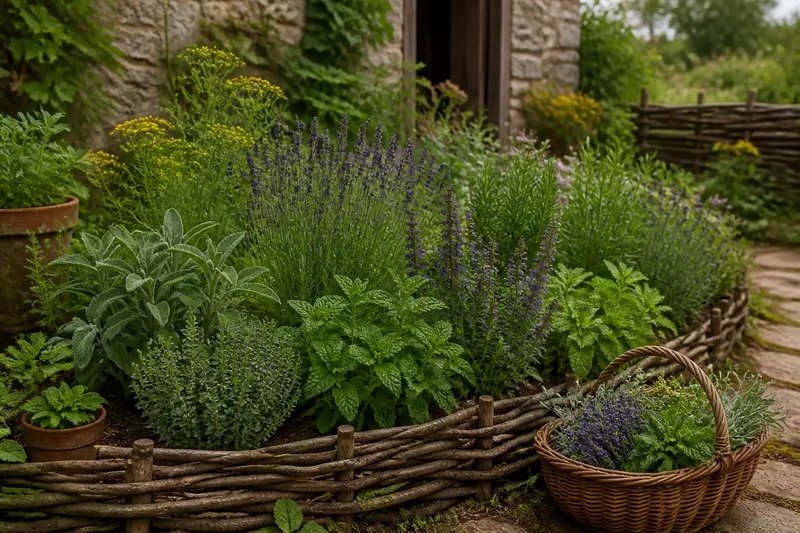
Before the kitchen window became a familiar place for a pot of parsley or thyme, household gardens could supply plants for food, household tasks and care. A bed might hold sage, rue, mint, fennel, savory, balm, hyssop or lavender. The exact collection varied with climate, custom, available land and what a household considered useful.
“Herb” was not a neat botanical category. The word could include leafy seasonings, aromatic plants, plants used in remedies and flowers valued for scent or color. A plant’s role depended on which part was gathered and what the gardener intended to do with it. Fennel leaves could flavor food, while lavender might scent linen as well as please the eye.
That overlap shaped the bed. A practical garden was arranged to make plants accessible, recognizable and manageable. It might sit near a dwelling, within a larger enclosed garden or beside other useful plots. Its order was not merely decorative: knowing where a plant grew mattered when someone needed to gather it or keep a vigorous plant from spreading into its neighbors.
Household care shaped what gardeners gathered
In English household gardens during the late medieval and early modern periods, some plants were grown for preparations associated with the medical knowledge of the time. That knowledge drew on inherited medical traditions and practical experience, but habits and plantings differed from one household and locality to another. Leaves, roots, flowers and seeds were gathered and handled in different ways, making the garden a store of materials that depended on the gardener’s knowledge.
Those past uses are not modern medical advice. They reveal what people valued and believed, not whether a plant is safe or effective for a present-day health concern. Some familiar garden plants can irritate skin, interact with medicines or be unsafe to eat. For treatment, consult a qualified health professional; identify plants carefully and follow authoritative safety guidance before handling or consuming them.
A household might keep frequently gathered plants close at hand and grow others in a separate patch or reserve. Strong scent could make a plant appealing, but scent alone did not make it suitable for every purpose. The bed reflected a household’s resources and needs rather than a universal recipe.
Cooking herbs joined daily routines without becoming kitchen-only
Parsley, thyme, sage and mint could be clipped for food while also carrying associations with household care, fragrance or hospitality. The same plant might serve several purposes; culinary use did not necessarily displace other roles.
Proximity mattered. A bed near a door shortened the walk for a cook gathering leaves, while a garden farther from the house could support a broader collection. Soil, sunlight, drainage and a plant’s habit of spreading also shaped placement. Mint can grow vigorously, so gardeners often contain it rather than let it wander through a mixed bed.
Say a gardener has a small plot beside the back door, where mint is crowding thyme and sage is hard to reach. They move the mint into a pot, shift the frequently clipped herbs nearer the threshold and set aside a corner for plants grown mainly for scent or flowers. The expected result is a bed that is easier to gather from, with less crowding and clearer distinctions between its uses.
The kitchen-window image can mislead because it suggests herbs were selected first for recipes and placed wherever cooking made them handy. In earlier English household gardens, the kitchen was one destination among several. A plant might serve the table, a household remedy, a linen chest or an ornamental border, depending on its qualities and the choices of the people tending it.
Useful plants could also shape a garden’s appearance
As English gardens were more deliberately arranged for pleasure and display, herbs could take on a visual role without losing practical value. Their foliage offered varied textures and shades; flowers brought color and scent; clipped edges or repeated plantings could give a bed a clear pattern. A plant valued for use could also be chosen because it made a border look composed.
This was not a clean division between a “useful” garden and a “beautiful” one. A fragrant plant beside a path could be both ornamental and useful. A formal arrangement might make herbs easier to identify and gather, while a productive bed could be laid out with visual care. It is like a well-used kitchen spoon: its pleasant shape does not stop it from being useful.
Changing tastes could alter what gardeners kept. Some plants became more conspicuous for their scent or flowers; others remained because they were dependable in cooking or household practice. A bed’s appearance could signal care and order, while its placement offered clues about the gardener’s priorities.
What can a historic English herb bed tell us?
Why did medicinal and culinary herbs grow together?
Many plants served more than one household purpose, and keeping them together made a useful collection easier to tend. The boundary between food, fragrance and healing was less sharp than modern labels can make it seem.
Did every English garden grow the same herbs?
No single planting plan suited every place or household. Climate, access to plants, available space and local habits shaped what gardeners grew, so a bed is best understood as a response to particular needs rather than a fixed standard.
What made an herb bed ornamental?
Arrangement could make useful plants part of a garden’s visual design: repeated forms, contrasting foliage, flowering stems or a defined edge all contributed. Ornament did not cancel practical use; it added another reason to keep a plant.
Can an old herb list be copied into a modern garden?
It can inspire a planting, but the list should be adapted to local conditions and the gardener’s aims. Check plant identity and relevant growing or safety guidance, especially before using a plant for food or health purposes.
A herb bed’s meaning depended on its gardener
The history of the English herb bed is best understood as a shift in emphasis rather than a sequence of replacements. Household care, cooking and ornament could share a plot, then rise or recede in importance as routines and garden tastes changed. A plant’s meaning lay not only in its name, but in who gathered it, what they did with it and where it grew.
For a present-day gardener, that history offers a way to plan without turning a bed into a museum piece. Choose herbs for the uses that matter, contain plants that spread and put frequently gathered ones within easy reach. Let foliage and flowers contribute to the view as well as the harvest. The herb garden before the kitchen window was not simply an early seasoning patch; it was a flexible household space shaped by the many jobs a plant could do.