Deadheading Does Not Mean Cutting Everything Back
Deadheading flowers selectively keeps borders tidy while preserving seed for birds, winter texture, and welcome self-sown plants. Learn what to cut and what to leave.
The most common deadheading mistake is removing every faded flower, and it can cost a garden its seed, winter texture, and a useful food source for birds. Deadheading flowers selectively means deciding what each spent bloom should do next, rather than treating every brown petal as a cue to cut.
A flower’s job may not be over when its color fades. Some plants make seeds that feed birds or scatter into open soil; others leave attractive shapes through the colder months. A few look untidy quickly or may produce more flowers after old blooms are removed. The right choice depends on the plant and the effect you want.
Pause before reaching for the shears
Take a short look around the garden before you start. Notice which flowers are still opening, which heads have turned to seed, and which stems are leaning across a path or hiding a nearby plant. A faded flower can be a small sculpture, a pantry for wildlife, or simply a mess. The same plant can play different roles in different parts of the garden.
Carry clean hand pruners or small snips, plus a bucket for material you remove. Use your fingers for soft stems that pinch cleanly; choose pruners for firm, woody growth. Avoid cutting blindly into a crowded clump. Find the stem below the flower and make sure you are not removing a fresh bud or leaves the plant still needs.
Think of deadheading like clearing a table after a meal: remove what is in the way, but do not throw away the centerpiece just because the plates are empty.
Choose which spent blooms to remove
Sort faded flowers by purpose rather than by age. Remove blooms that have turned mushy, dropped petals onto a plant below, or made a border look ragged. Keep heads that remain firm and decorative, especially if their shapes will add interest after the leaves fade. Leave some seed-bearing flowers where birds can reach them.
Many gardeners remove spent blooms from roses or repeat-flowering perennials to encourage a tidier display and sometimes further flowering. That response varies by plant, and not every variety benefits in the same way. Some plants bloom once and then put their energy into seed; others offer little or no new flowering after a cut. Check the plant label or reliable guidance for the specific variety when the right cut is unclear.
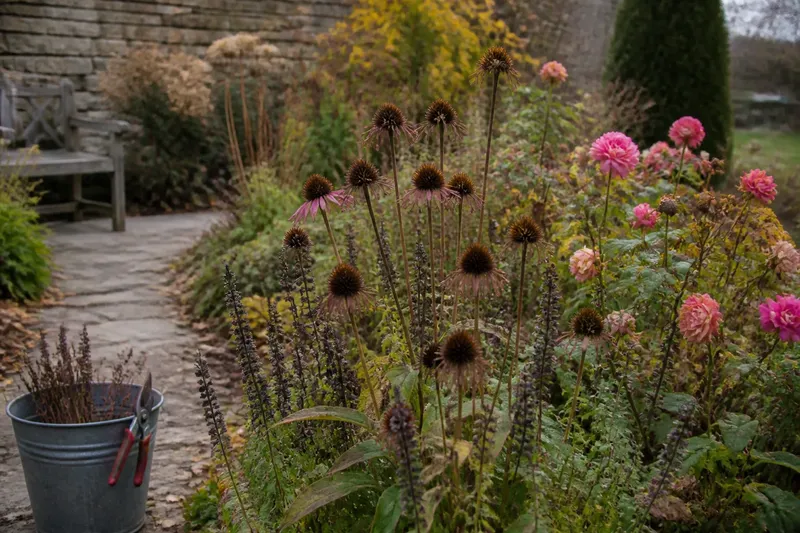
Imagine a border with coneflowers, a rose, and soft-stemmed salvia beside a walk. You want a neater path but also want seed for birds. Snip the rose’s faded blooms, pinch off salvia flowers that have collapsed onto their leaves, and leave several coneflower heads standing. The expected visible result is a clearer path alongside seed shapes and height in the border.
Inspect when changes are visible, not by the calendar
There is no need to make a second pass on a fixed weekly schedule. Look again when you are already tending the garden or when a visible change gives you a reason: fresh blooms have opened, petals have fallen, a stem has slumped, or seed heads have matured. If nothing is untidy or obstructing nearby growth, leave the pruners in the shed.
When you do deadhead for appearance, cut just above a healthy leaf or side shoot rather than leaving a long, bare stub. On plants with a cluster of blooms, remove the finished flowers while preserving unopened buds. Keep the cut targeted. You are shaping the plant’s outline, not shearing the whole bed into a single surface.
For plants you want to self-sow, leave a few mature heads in a suitable patch of open ground, then watch for seedlings. If they appear in awkward places, thin or move them while small. If you do not want seedlings, remove the heads before seed falls. This is a choice about where new plants may grow, not a rule that every seed head must go.
Let some seed heads carry the garden into colder weather
As flowering slows, view the garden from places you use most, such as a doorway, bench, or kitchen window. Keep seed heads that make a pleasing outline against a wall or fence. Stems with hollow, collapsed, or moldy growth may be better removed, especially if they smother neighboring plants. Leave healthy upright structures where they add texture and remain accessible.
Choose disposal according to the condition of the material and your local composting practice. Sound, disease-free stems may suit a home compost pile; badly affected material may need another route. Do not leave piles where they block paths or bury living crowns. A small bucket helps you collect only the stems you meant to remove.
Resist the urge to make every bed look newly clipped. A few stems can catch frost, hold their shape, and offer a changing view after flowering ends. If a plant sprawls over a path or obscures a small evergreen, tidy that portion and leave the rest. Selective work preserves the garden’s layers without making it difficult to use.
What should you know before deadheading flowers?
Should every spent flower be removed?
No. Remove flowers when their appearance bothers you, when they collapse onto nearby growth, or when you want to limit seed. Leave healthy heads that add structure, feed birds, or may self-sow where you welcome new plants.
Does deadheading make a plant bloom again?
It may encourage further flowers on some repeat-blooming plants, but it will not turn every plant into a continuous bloomer. Check the plant’s growth habit and watch for fresh buds after removing spent blooms.
When should seed heads stay on the plant?
Keep them when they are attractive, provide food, or offer seed you want to collect or scatter. Remove them if seedlings would be unwelcome or if the heads are damaged and untidy.
Where should the cut go?
For a single faded bloom, follow its stem down to a healthy leaf or side shoot and cut just above it. In a flower cluster, remove only the finished blooms while leaving unopened buds and sound foliage intact.
Leave the garden ready for its next change
Before putting away the pruners, check the edges and the plants you pass most often. Clear fallen petals from low foliage, collect the few stems you chose to remove, and leave the rest with intention. Deadheading flowers selectively is not a blanket cleanup; it is a series of small decisions that keeps the garden pleasant now while leaving room for seed, shape, and next season’s growth.