Why Garden Paths Change the Way a Space Feels
Garden paths shape how you move, pause, and see planting. Learn how direction, width, and surface choices can make a garden feel more open or intimate.
The most common garden path mistake is treating it as a stripe between planting beds, then wondering why the garden feels like a corridor. A path does more than keep shoes clean: its direction, width, and pauses influence where you walk, what you notice, and how much of the space you can see at once.
How a garden path changes the feel of a space
A path creates a visual and physical invitation. A direct route makes a destination feel close and easy to reach; a route that bends or passes behind planting can make the same destination feel more private and gradually revealed. Neither is inherently better. The effect depends on whether you want a garden to feel open, sheltered, brisk, or unhurried.
Paths also divide the view. A broad, pale surface may read as a prominent shape, while stepping stones set into low groundcover can recede. A dark path can draw the eye forward, while a light one can stand out against deep green leaves. Think of the route as a ribbon laid across a painting: its color and shape affect how the surrounding forms are read.
Consider the view from a kitchen window, a patio chair, and the garden entrance. A path that looks subtle from one position may become the main feature from another. Checking these everyday sightlines helps you judge the path as part of the whole composition rather than as a route viewed only from above.
What a straight or curving garden path communicates
A straight path gives a clear line to follow. It can connect a gate to a door, lead toward a bench, or make a small garden seem orderly. Because the destination is visible, the walk tends to feel purposeful. That can suit a busy entrance, though an uninterrupted line through a planted space may also make the garden feel shorter or more exposed.
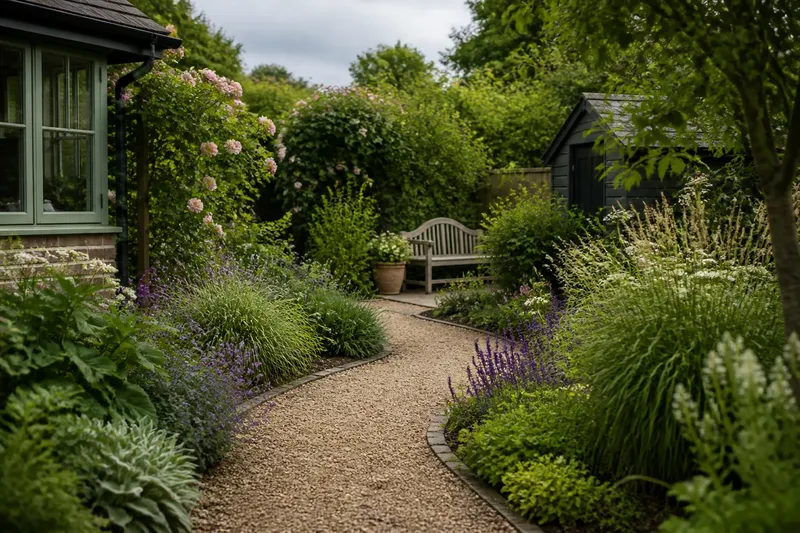
A curve delays the view ahead. Planting can partly screen the route, offering a sequence of glimpses rather than one full reveal. A gentle change in direction may feel relaxed; a tight bend can feel fussy if the space around it does not support the turn. The useful question is not whether curves look natural, but whether each change in direction gives the walker a reason to turn.
Direction affects more than the outline on a plan. A diagonal route can make a compact space feel as if it extends beyond its edges, while a route aligned with a fence may reinforce that boundary. If an existing route is already comfortable and useful, preserving its line may make more sense than reshaping it for appearance alone.
How garden path width affects comfort and planting
Width changes the relationship between walker and planting. A narrow path can bring leaves close to the body and create a sheltered feeling. A wider route allows people to pass more easily and gives beds more distance from foot traffic, but it can also become the dominant surface in a small garden.
Start with the path’s actual use. A route to a secluded seat may be designed for one person moving slowly; a main connection between a gate and a frequently used door may need room for people to pass or carry bulky items. Consider turning space at entrances and around corners as well as the width of straight sections.
Use a hose, rope, or strips of cardboard to mark possible edges on the ground. Walk the route in both directions. Notice whether your shoulders feel crowded, whether you brush against plants, and whether the marked surface leaves enough room for the planting you want to see. These marks are easy to adjust before you choose stone, brick, gravel, or another permanent material.
Why pauses matter along a garden path
A pause is any point where a walker naturally slows or stops: a small widening, a change in surface, a view through an opening, or a place to turn toward a seat. These moments keep a path from feeling like a line with only a beginning and an end. They also give a garden room for detail without requiring the route to become elaborate.
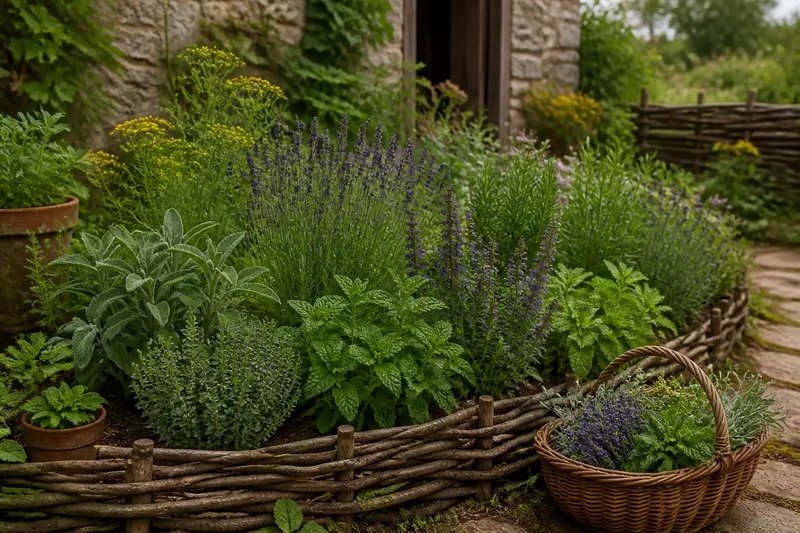
A pause works best when something supports it. A bench, a pot of fragrant herbs, a view toward a flowering shrub, or a patch of sunlight can make a small stopping place feel intentional. Keep the route clear where people need to pass, and let the stopping point sit slightly aside if the path is a main thoroughfare.
Say you have a narrow route from a patio to a shed, with a climbing rose partly hiding the bend. You could mark a small widened area beside the bend with cardboard, then place a simple seat facing the rose while keeping the walking line clear. If a visitor can stop to look without blocking someone carrying tools to the shed, the pause is doing its job; if the seat pinches the route, move it farther aside or remove the widening.
Which garden path surface suits the experience you want?
Surface affects appearance, sound, footing, and the amount of maintenance a route asks for. Gravel can make a soft crunch underfoot and visually blend with informal planting, while brick or stone creates a more defined edge. Stepping stones leave more planting visible between them, but their spacing should feel comfortable to walk across rather than merely attractive from a window.
Look at samples beside the plants and structures that will remain. A warm brick may relate to a house wall; gray stone may sit quietly among foliage; pale gravel may catch the eye in shade. Texture matters too. Smooth, regular paving often feels formal, while mixed shapes and irregular joints can make a route appear looser.
Think about how the surface behaves where the path meets a doorway, lawn, or planting bed. Loose gravel can migrate onto adjacent areas, and joints can collect leaves or soil. A crisp edge made from metal, brick, or stone may keep materials distinct, while a soft edge can make the route seem to dissolve into groundcover.
For a frequently used route, choose a stable surface appropriate to the people who use it and the conditions at the site. Paths that become slippery, uneven, or difficult to maintain can alter how comfortably people move through the garden. If the choice depends on product instructions or local requirements, follow those rather than relying on a general rule.
How to make a garden path welcoming without revealing everything
Use partial views rather than barriers alone. A low evergreen, a clump of ornamental grass, or a screen of tall flowers can interrupt a long sightline while leaving the route easy to read. The walker can sense where the path goes but may not see every bed at once. That small amount of uncertainty can make an ordinary walk feel more attentive.
Keep the destination legible enough that the route does not feel confusing. A visible patch of paving beyond foliage, a repeated material, or a clear opening can signal continuity. If the path disappears entirely behind dense planting, people may hesitate or choose a shortcut through the bed.
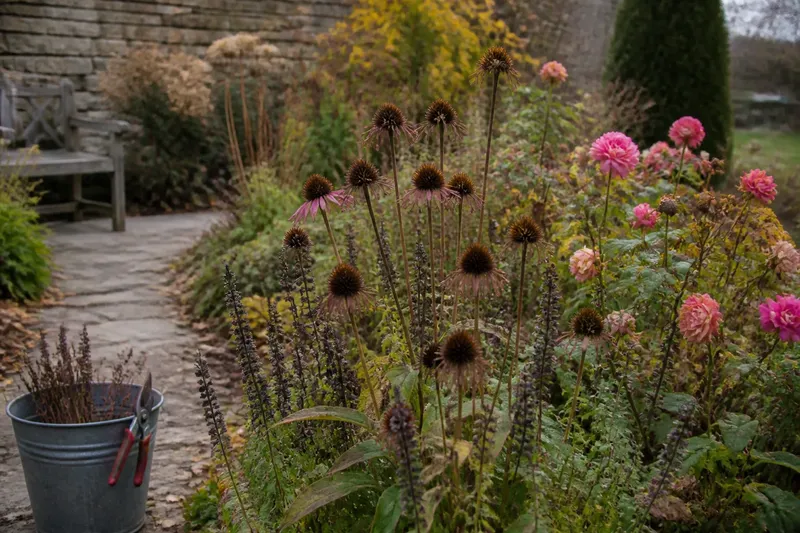
Plant height and seasonal change also shape what the path reveals. Bare stems may open a view in one season; leafy growth may close it later. Imagine a path beside a border of tall perennials, with a birdbath partly hidden behind the stems. Mark a small opening in the planting from the path and check that the route remains clear; if the birdbath becomes visible while the surrounding foliage still softens the view, retain the opening, and if the route remains hard to read, trim a little more or add a visible edge of paving.
What should you ask before changing a garden path?
Should a path point directly to a focal point?
It can, especially if the focal point is meant to be seen from the entrance. If you want a slower reveal, offset the route or let planting frame the view rather than block it completely.
Can a narrow path still feel comfortable?
Yes, if its purpose and surroundings support close passage. Mark the route with a hose or rope, then walk it with the kinds of items people regularly carry; if shoulders or belongings brush plants, widen the marked line or choose a different route.
Do curved paths always make a garden feel larger?
No. A curve may suggest movement beyond a view, but a cramped or unexplained bend can make the space feel awkward. Judge the route from the places where people enter, sit, and look out; if the bend hides the destination without creating an inviting view, soften or straighten it.
Where should a path widen?
Consider widening where people turn, meet, stop, or approach a destination. Mark the proposed area with cardboard and walk through it; if the widening gives people room without swallowing the planting, keep it, and if it dominates the bed, reduce it or move the pause beside the route.
How direction, width, and pauses work together
Think of these choices as a conversation. Direction tells the eye where to go. Width sets the degree of openness or closeness. Pauses provide places to notice something along the way. A straight route can still feel gentle if a planted pocket interrupts the view; a curve can feel formal when repeated paving and clipped edges make its movement precise.
Say you have a narrow garden with a gate, a patio door, and a bench tucked behind a bed of tall perennials. First, mark a straight line from gate to door with a hose; it gives clear access, but the bench remains hidden. Next, shift the hose toward the bench and add a gentle turn, leaving an opening in the perennials as a visual cue. Walk the route carrying a watering can; if the turn feels cramped, move the hose away from the bed, and if the doorway remains easy to reach while the bench becomes visible in stages, the adjusted route better serves both destinations. These are invented design details, not a measured plan.
Before settling on a design, mark the route and observe it from several positions at different times of day. Check what the path hides, what it frames, and where a person might naturally slow down. Then adjust one feature at a time. A small shift in direction or a modest widening at a turn may change the experience more than adding a new ornament.
For garden path design, begin with the walk you want someone to have: quick passage to a door, a quiet route to a seat, or a sequence of views through planting. Let that intention guide the line, the amount of open surface, and the places where the route invites a pause. Check the layout with a hose before choosing permanent materials; if the route feels clear and comfortable from entrance to destination, you have a useful starting point for the finished path.